
Healthy teeth and gums are an important part of your dog or cat’s overall wellbeing. Dental problems can develop gradually, and pets may not always show obvious signs that something is wrong. A pet that continues eating normally may still have plaque, tartar, gum inflammation or other oral health problems.
Pet dental health is therefore not simply about keeping teeth clean or breath fresh. It is about ensuring optimum wellbeing and comfort of your furry baby. A combination of consistent home care and regular veterinary examinations gives pet owners the best opportunity to protect their pet’s oral health.
Why Is Pet Dental Health Important?
Plaque is a sticky film containing bacteria that forms on the surface of teeth. If plaque is not regularly removed, it can mineralise and become tartar, also called calculus. Tartar provides a rough surface where additional plaque can accumulate and can contribute to inflammation of the gums.
As dental disease progresses, inflammation can extend below the gumline and affect the tissues that support the teeth. Periodontal disease may cause pain, infection, damage to supporting tissues and tooth loss. This is why preventive pet dental care matters even when your pet appears healthy.
Looking after your pet’s mouth is also an opportunity to notice changes early. Regular checks can help you identify problems that may need veterinary attention before they become more advanced.
Signs Your Pet May Have Dental Disease
Dogs and cats can show different signs, and some may be subtle. Look for:
- Persistent or unusually strong bad breath.
- Red, swollen or bleeding gums.
- Yellow or brown build-up on the teeth.
- Drooling more than usual.
- Chewing differently or showing less interest in food.
- Dropping food while eating.
- Pawing at the mouth or showing discomfort when the face is touched.
- Loose, damaged or missing teeth.
- Facial swelling or discharge.
Bad breath is often one of the first signs noticed by owners, but it does not always have a dental cause. Persistent or unusual breath should be discussed with a veterinarian rather than being considered a normal part of getting older.
How Does Dental Disease Develop?
Dental disease generally develops over time. Plaque forms on the teeth, and if it is not removed, it can harden into tartar. The gums may then become inflamed. If inflammation progresses below the gumline, the structures supporting the teeth can become affected.
The visible part of a tooth does not always tell the whole story. Dental disease can occur below the gumline, which is one reason a veterinary examination is important. Your veterinarian can assess your pet’s mouth and advise whether further investigation or treatment is needed.
How to Care for Your Pet’s Teeth at Home
1. Make tooth brushing part of the routine
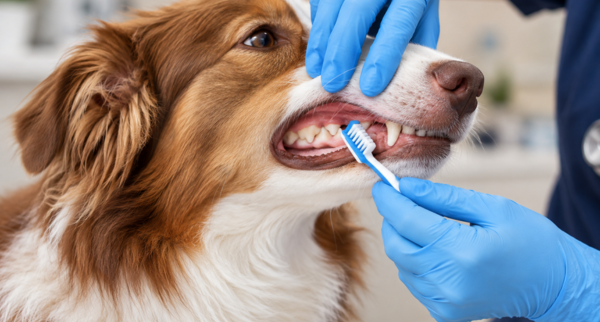
Daily brushing is the most effective at-home method for controlling plaque. However, not every pet will accept a toothbrush immediately. Introduce brushing gradually. Start by allowing your pet to become comfortable with gentle handling around the mouth, then progress to brief brushing sessions.
2. Use toothpaste designed for pets
Always choose toothpaste formulated specifically for dogs or cats. Human toothpaste should not be used because pets may swallow it and human formulations are not designed for them.
3. Choose dental products carefully
Some dental diets, chews and other products may help with plaque or tartar control. Their suitability varies between animals, so ask your veterinarian which options are appropriate for your pet. Dental products should complement regular care rather than replace veterinary examinations or effective home brushing.
4. Check your pet’s mouth regularly
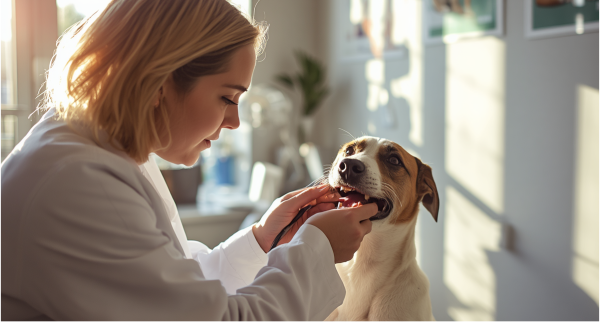
A simple visual check can help you notice changes in the teeth and gums. Look for redness, swelling, bleeding, unusual build-up, damaged teeth or anything that appears different from normal. Do not force your pet’s mouth open if they are distressed or uncomfortable.
What Happens During a Professional Dental Check?
A veterinary dental assessment begins with an examination of the mouth, teeth and gums. Your veterinarian may look for plaque, tartar, gum inflammation, damaged teeth, loose teeth and other abnormalities.
If a professional dental procedure is indicated, treatment may include scaling to remove plaque and tartar, polishing, probing around the teeth and dental X-rays where appropriate. X-rays can help assess areas that cannot be fully evaluated by looking at the visible surface of the teeth.
A complete dental examination and treatment generally require general anaesthesia. Anaesthesia allows the veterinary team to examine the whole mouth, including below the gumline, and safely carry out procedures when required. Anaesthesia-free cleaning does not provide the same level of examination or treatment and is not a substitute for veterinary dentistry.
When Should You Arrange a Dental Assessment?
Arrange a veterinary assessment if you notice persistent bad breath, visible tartar, red or swollen gums, bleeding, changes in eating, mouth discomfort, loose teeth or facial swelling.
You do not need to wait until your pet shows obvious pain. Routine dental checks are useful because pets can hide discomfort, and early assessment may identify problems before they become more difficult to manage.
How Often Should Your Pet Have a Dental Check?
There is no single dental schedule that is suitable for every dog or cat. Your pet’s needs can depend on their age, breed or size, general health, existing dental disease, previous dental procedures and home-care routine.
Your veterinarian can recommend an appropriate schedule based on your individual pet. Dental care can also be discussed during routine health examinations, allowing oral health to be considered alongside the rest of your pet’s preventive care.
Practical Pet Dental Health Checklist
- Check your pet’s mouth regularly for noticeable changes.
- Introduce tooth brushing slowly and aim for consistent home care.
- Use only toothpaste and dental products made for pets.
- Do not assume persistent bad breath is normal.
- Ask your veterinarian before choosing dental chews or diets.
- Keep routine veterinary examinations up to date.
- Arrange an assessment if you notice pain, swelling, bleeding, tartar or changes in eating.
Frequently Asked Questions
How do I know if my pet needs dental care?
Bad breath, tartar, red or swollen gums, bleeding, changes in eating, drooling or mouth discomfort can indicate a dental problem. A veterinary examination is the best way to determine what is happening and what care may be appropriate.
Can I brush my dog’s or cat’s teeth every day?
Yes. Daily brushing is generally the most effective home method for controlling plaque. Introduce it gradually and use toothpaste specifically formulated for pets.
Can I use human toothpaste?
No. Use toothpaste made for dogs or cats. Pets can swallow toothpaste, and human toothpaste is not intended for them.
Does bad breath always mean dental disease?
No. Dental disease is a common cause of bad breath, but other causes are possible. Persistent or unusual breath should be assessed by a veterinarian.
Does my pet need anaesthesia for a professional dental procedure?
A complete veterinary dental examination and treatment generally require general anaesthesia. This enables the veterinary team to examine the whole mouth, including below the gumline, take dental X-rays when indicated and safely perform treatment.
Our Approach to Pet Dental Care
At Best Care Vets Beaconsfield, dental care forms part of a broader preventive approach to pet wellbeing. Our aim is to help pet owners understand the importance of oral health, recognise changes at home and know when professional veterinary advice may be appropriate.
If you are concerned about your dog or cat’s teeth, gums or breath, speak with our veterinary team about an examination and a dental-care plan suited to your pet.
Conclusion
Healthy teeth and gums are an important part of your pet’s wellbeing. Consistent pet teeth care at home, combined with routine veterinary examinations and early attention to dental problems, can help support good oral health and comfort.
If you have noticed bad breath, tartar, gum changes, difficulty eating or other signs of oral discomfort, contact Best Care Vets Beaconsfield to arrange a veterinary assessment.